

Detroit Web Development and the Future of Business Online
The conversation about whether businesses need a website ended about fifteen years ago. You have one. Almost everyone does.
The real problem facing most established businesses — manufacturers, contractors, law firms, medical practices, professional service companies — is that their outdated business website is doing active damage. Not “we don’t exist online.” More like: “we exist online, and it’s making people question whether they want to work with us.”
That’s a harder problem to name, but it’s a much more common one.
What “Outdated” Actually Means
It’s not just that your site looks old, though that matters. An outdated site typically has one or more of these problems:
- Messaging that no longer reflects what you do. Your company has evolved. Your site still describes where you were in 2016. New service lines, new markets, and new capabilities are buried or missing entirely.
- A structure built around what you sell, not what buyers need to know. Most older sites are organized around internal departments. Buyers don’t think that way — they come with problems they need solved, and they leave when they can’t quickly connect what they need to what you offer.
- No clear path to action. “Contact Us” buried in a nav menu isn’t a conversion strategy. Buyers want to know the next step before they commit to reaching out — and if the site doesn’t give them one, they close the tab.
- Mobile and speed issues. Google uses mobile-first indexing, which means a site that works fine on a desktop but breaks on a phone is penalized in search rankings, not just annoying to users.
- Thin or missing SEO foundation. No page titles, weak meta descriptions, no structured content — which means the site essentially doesn’t exist to anyone who isn’t already looking for you by name.
The Three Places an Outdated Site Costs You Most
1. Sales You Never Knew You Lost
When someone hears about your company — from a referral, a trade show conversation, a LinkedIn post — they go look you up. What they find either confirms the referral or undermines it.
A site that looks neglected, has broken links, or still shows products you discontinued three years ago quietly kills warm leads. The person doesn’t call you to say “your site confused me.” They just don’t call.
This is the hardest cost to measure and the easiest to underestimate. The referral was working. Your site stopped it.
2. Recruiting
This one surprises some business owners, but it shouldn’t. When a strong candidate gets a job offer or is considering submitting an application, they research the company. They look at your site.
If your site doesn’t clearly communicate your culture, your track record, your stability, and what makes working there worthwhile — or if it just feels abandoned — that candidate has more doubt than they did before they looked. In a tight labor market, that doubt matters.
For manufacturers, contractors, and industrial businesses especially, this is a chronic blind spot. The site gets treated as a sales tool only, and the recruiting function gets ignored until there’s a hiring crisis.
3. Credibility in Competitive Situations
For companies that compete on bids, RFPs, or proposals — construction, engineering, legal, medical, any professional services firm — your website is frequently part of the evaluation, even when no one says so out loud.
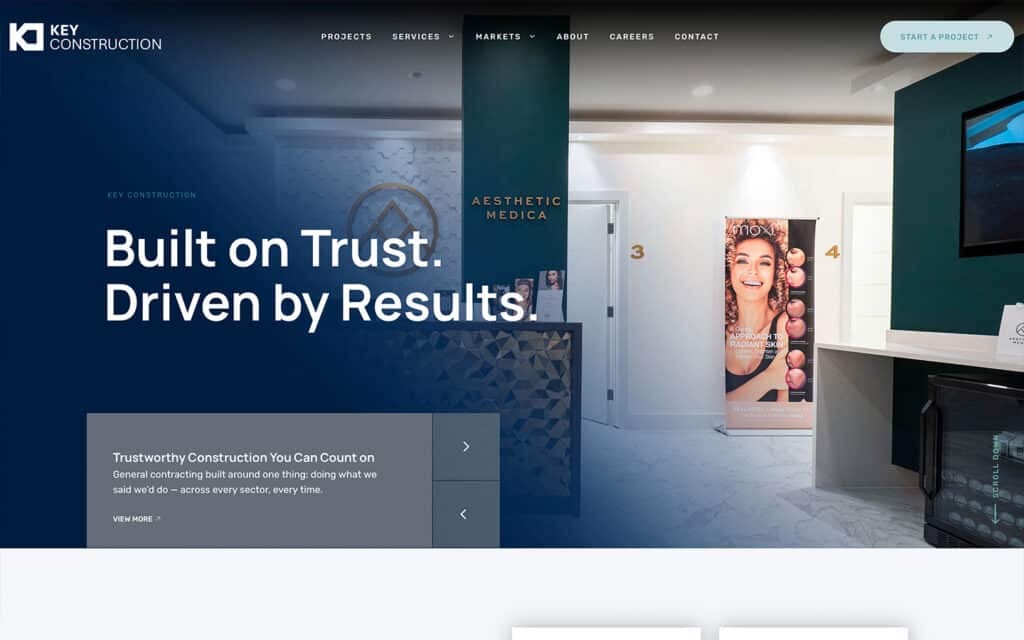
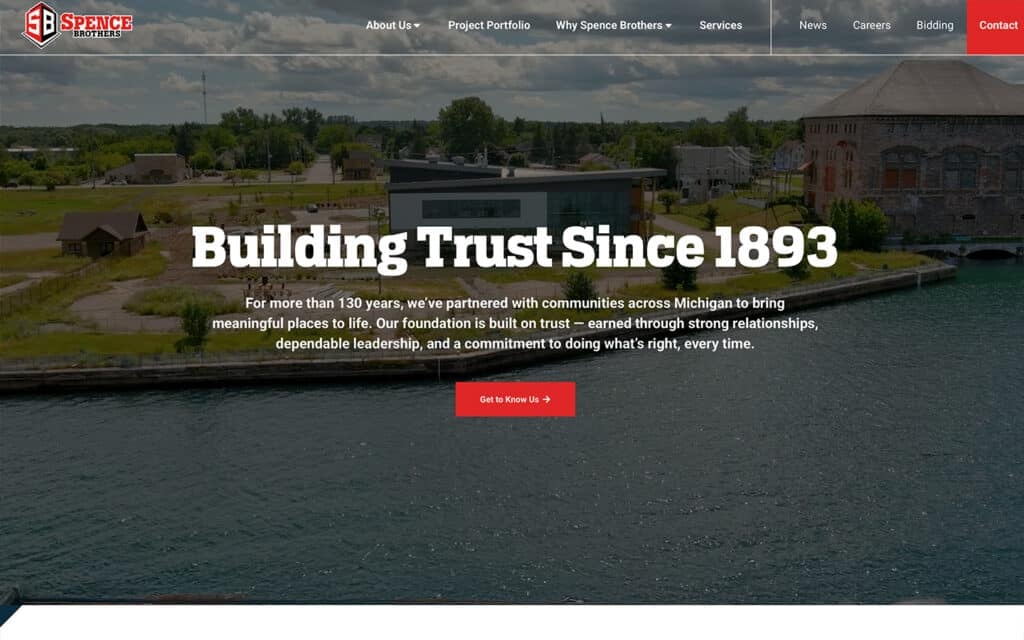
Decision-makers who have two or three comparable options will look at all of them online. A competitor with a cleaner, clearer site that explains what they do and shows real evidence of competence starts that conversation ahead of you. The gap doesn’t have to be large to matter.
Why Most Sites Don’t Get Fixed
It’s usually not money, and it’s almost never lack of interest. The real reasons:
The people who know the business best are busy running it. Writing good website content requires someone to sit down and articulate what actually differentiates you — and that kind of focused thinking is hard to prioritize when there are customers to serve and jobs to manage.
Redesign projects feel like big lifts. They don’t have to be. Most businesses don’t need a complete tear-down. They need smarter structure, cleaner messaging, and a better content foundation — applied to what’s already there or rebuilt in a focused way.
No one owns it internally. Sales thinks marketing owns the website. Marketing is one person. IT has access but doesn’t touch the content. The site drifts.
What Actually Moves the Needle
If you’re trying to figure out where to start, these are the things that make the biggest practical difference:
- Homepage clarity. Within five seconds, a visitor should know who you serve, what problem you solve, and what to do next. Test this by having someone unfamiliar with your business read your homepage without coaching.
- Service or product pages that answer real questions. Not just “what we offer” — but “what does it include,” “who is it right for,” and “what does working with you actually look like.”
- A call-to-action that matches how your buyers actually buy. Not everyone is ready to “request a quote” on the first visit. Giving people a lower-friction option — a download, a checklist, a case study — keeps them engaged while they’re still deciding.
- Basic on-page SEO. Title tags, meta descriptions, header structure, and page speed are table stakes. They won’t rank you for competitive terms on their own, but skipping them leaves visibility on the table for no good reason.
The Honest Frame
Most established businesses built their reputation through relationships, quality work, and word of mouth. The website was an afterthought.
That worked for a long time. It’s working less well now — not because “digital transformation” or any other buzzword, but because buyers at every level do more independent research before they engage, and what they find shapes whether they engage at all.
Your reputation does the work. Your site either confirms it or undermines it. Closing that gap is worth the effort.
If your site no longer reflects what your business has actually become, that’s the kind of problem Formcode is built to solve. Reach out and we’ll take an honest look at where you stand — no audit-as-sales-pitch, just a straight conversation about what’s worth fixing and in what order.
***
More Than a Web Agency — A Long-Term Digital Partner
Choosing the right web development partner is about more than just code—it’s about collaboration, trust, and measurable results. At Formcode, we treat every project as a partnership, working closely with clients to understand their goals, challenges, and growth opportunities.
With over 26 years of experience, we’ve helped businesses across Detroit and beyond elevate their digital presence—from manufacturers and construction companies to non-profits and service providers.
Let’s Build Something Great Together
Ready to elevate your digital presence with a smarter, locally rooted web strategy?
Contact the Formcode team today to schedule a discovery call, or explore how our web development services can help your business grow.